


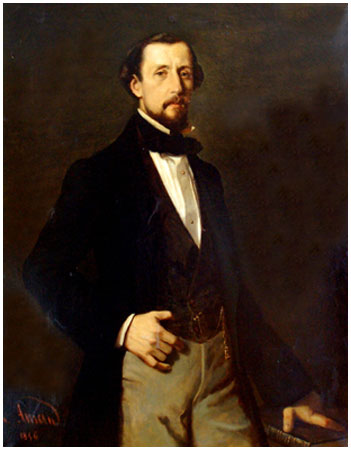
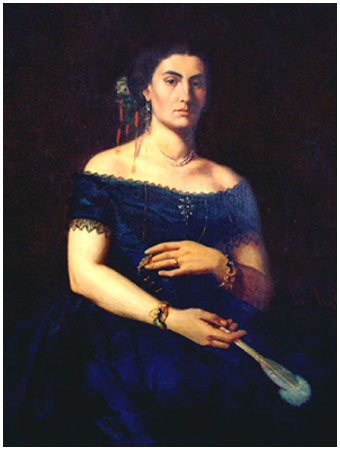
Alexandru Aman (1820–1885), a magistrate and the elder brother of the renowned painter Theodor Aman, and his wife, Aristia Aman (1833–1904), née Grigorie Lăceanu, bequeathed through their wills their entire estate—houses, furniture, paintings, books, and works of art—to the Craiova City Hall, for the establishment of a public cultural institution: the “Alexandru and Aristia Aman” Foundation, comprising a library, a museum, and a picture gallery.
Excerpts from the founders’ wills:
“For the education of the people of my native city of Craiova, I bequeath my library, as well as my entire collection of original family paintings, works of art, and all my furniture. With these, a free library and a museum shall be established to promote the appreciation of beauty in itself.”
Alexandru Aman (14 noiembrie 1884)
“I wish that in my houses in this city, together with the land and their outbuildings on Kogălniceanu Street, the Craiova City Hall shall establish and maintain a public library on the ground floor, and a museum with a picture gallery on the upper floor of these houses.”
Aristia Aman (14 mai 1901)
The Lăceanu family house, early 20th century
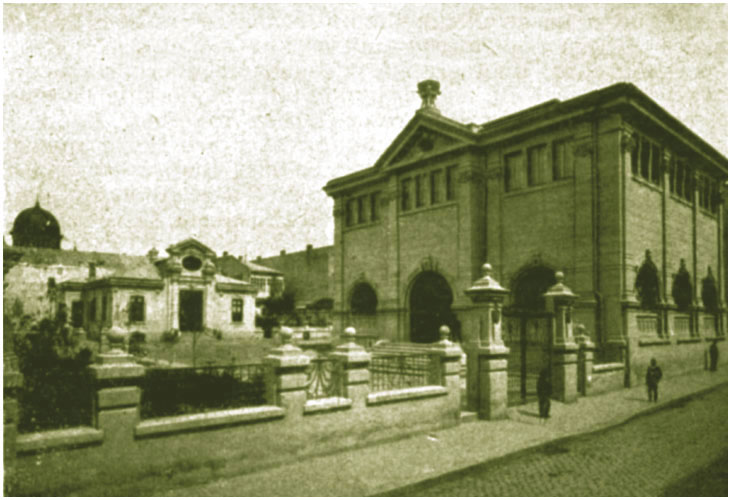


The “Alexandru and Aristia Aman” Foundation, inaugurated on December 21, 1908 and comprising three sections—a library, a picture gallery, and a museum—enjoyed outstanding prestige, also confirmed by the signatures in the book of honour of prominent figures who visited this important cultural centre in Craiova.
Among them were: King Ferdinand, Queen Marie, King Carol II, Prince G. Știrbei, General Al. Averescu, Nicolae Iorga, Petre Antonescu, N. Ghica-Budești, Mihail Dragomirescu, Emil Grigorovița, Ramiro Ortiz, G. Ionescu-Șișești, Simion Stoilow, Sabba Ștefănescu, Gh. Țițeica, Ion Kalinderu, Lucian Blaga, Victor Eftimiu, Șt. O. Iosif, Marius Bunescu, Onisifor Ghibu, C.C. Giurescu, Tache Papahagi, Simion Mehedinți, Spiru Haret, Ion Minulescu, and others.
The hall and main staircase of the Aman House · The reading room · The painting room (Picture Gallery) · The main hall of the Museum of the “Alexandru and Aristia Aman” Foundation

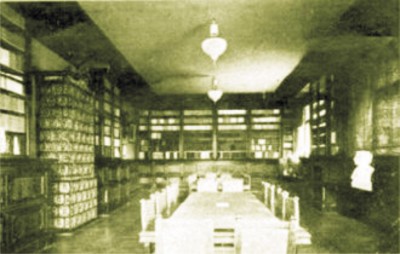

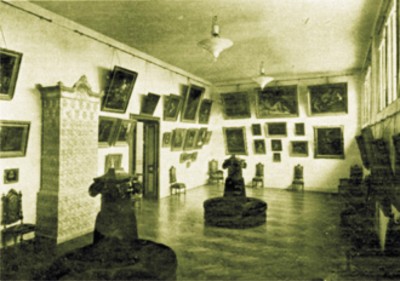
The library began operating with a small number of volumes donated by the founders—works of literature, art, history, law, and philosophy, in Romanian, French, Greek, and Latin—family heirlooms, books acquired by Alexandru Aman during his studies in Paris, purchased in Romania, or received during his lifetime.
The library’s holdings grew, as attested by documents of the time, through acquisitions and donations resulting from connections with a number of cultural and scientific institutions or private individuals who loved books. The first institution to contribute to enriching the collections of the Alexandru and Aristia Aman Library was the Romanian Academy, which donated valuable works by Romanian historians and philologists.
In 1921, after Theodor Popescu and Ștefan Ciuceanu, Elena Farago was appointed to lead the Aman Foundation. She headed this institution for more than three decades, living and creating in the house that today hosts a permanent exhibition dedicated to the poet.
Until 1950, the library was administered by the local city hall. Starting on November 1, 1950, it became a regional library until 1968, then a municipal library, and from 1974 a county library.
The books listed in the foundation’s inventory are found in the core collections of Craiova’s public library, the institution that resumed the founders’ name in 1991.
The foundation’s other assets—furniture, paintings, engravings, coins, etc.—are recorded in the inventories of the Craiova Art Museum and the Oltenia Museum in Craiova.